
What To Do If You Are Between Two Kibbe Types
 Kibbe Body
Getting down to two types is actually enormous. Think about what's already off the table: every shape that doesn't fit your vertical, every silhouette that ignores your curve, every fabric weight that fights your frame. If you're sitting between two types, you've already done most of the work.
But let's zoom out first.
Why find your type at all?
Kibbe exists to help you appear as conventionally attractive as possible within your natural lines. So we study Kibbe to understand what clothes, silhouettes, fabrics, and style suit us. We're trying to feel good in what we wear.
David Kibbe tells us there are two things that determine your Image Identity:
Your yin/yang balance. Think about how you would literally describe yourself: are you angular or soft, sharp or rounded, bold or delicate, or somewhere in the middle? This is how we define the sculpture.
Your Personal Line. The map of how your body's proportions all fit together. This is the blueprint for dressing it.
As he puts it, "it is the discovery of both that determines your Image Identity." Once you know both, you know what you're dressing. You make the clothes work with that shape, not against it.
He also acknowledges that colour plays a role. The Seasons system sits alongside Kibbe, telling you which tones work with your colouring rather than your shape. Two separate tools, both worth having.
When you start adding more elements, things like essence, or my favorite, persona, the things that make you recognizable as yourself, you stop building a type and start building a style profile. A real blueprint for who you are and how you want to show up in the world.
Your Personal Line is one part of that. Your Kibbe type is one part of that. Your colour season is one part of that. The type is a starting point, often the first step people take in the journey.
What I see in the communities
Getting eyes on your photos, gathering perspectives, taking in how others read your proportions are all useful, and can really be a helpful stop along the way. But sometimes we can get stuck at this pit stop. We can spin our tires until the wheels fall off. The discovery phase becomes the destination. I have seen people stuck in this part of the journey for months, even years, hoping for a consensus that may never fully come. Not because the answer isn't there, but because gathering external perception can become its own loop. The post gets responses, the responses conflict. We try again.
Of course, if you're updating your photos, better lighting, better outfits, line trials, styling, clearer angles, that's genuinely helpful and worth doing.
And kudos to the community because when the consensus isn't formed, we often narrow it down to two types. That's progress. That's great insight. Two types that come up together usually do so for a reason.
Something I think we often forget is how similar types really are. There are only so many adjustments that can be made to a neckline, a sleeve, a hem. There are only so many fabrics we can choose from. The Personal Line accommodations across similar types overlap more than the discourse would have you believe.
A look at common pairings and what they actually share:
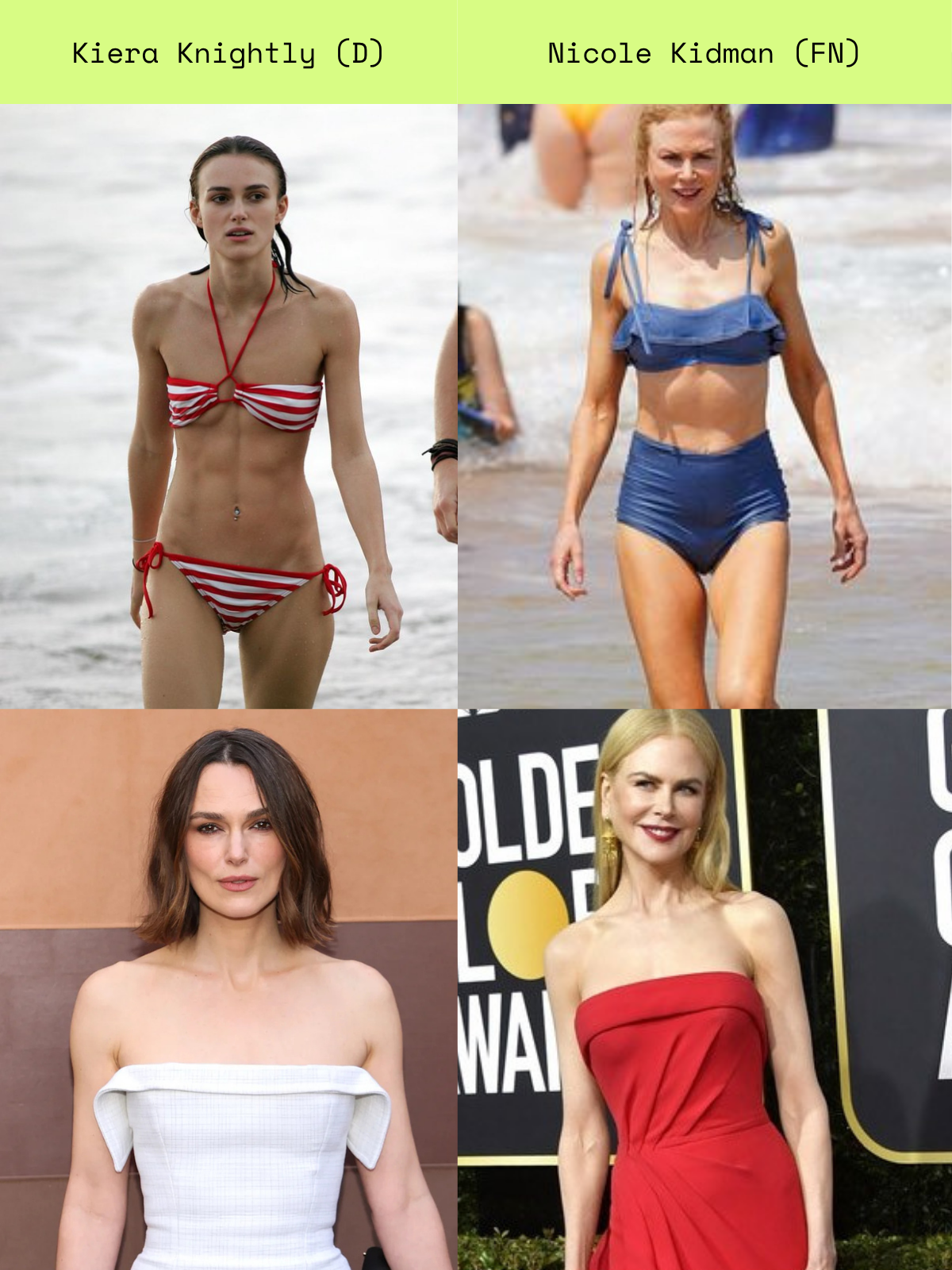
D / FN
Both need vertical, both carry yang. The question is whether your frame wants to narrow or expand alongside it. Test fabric weight (structured vs flow) sleeve (narrow vs wide) and neckline (closed vs open).
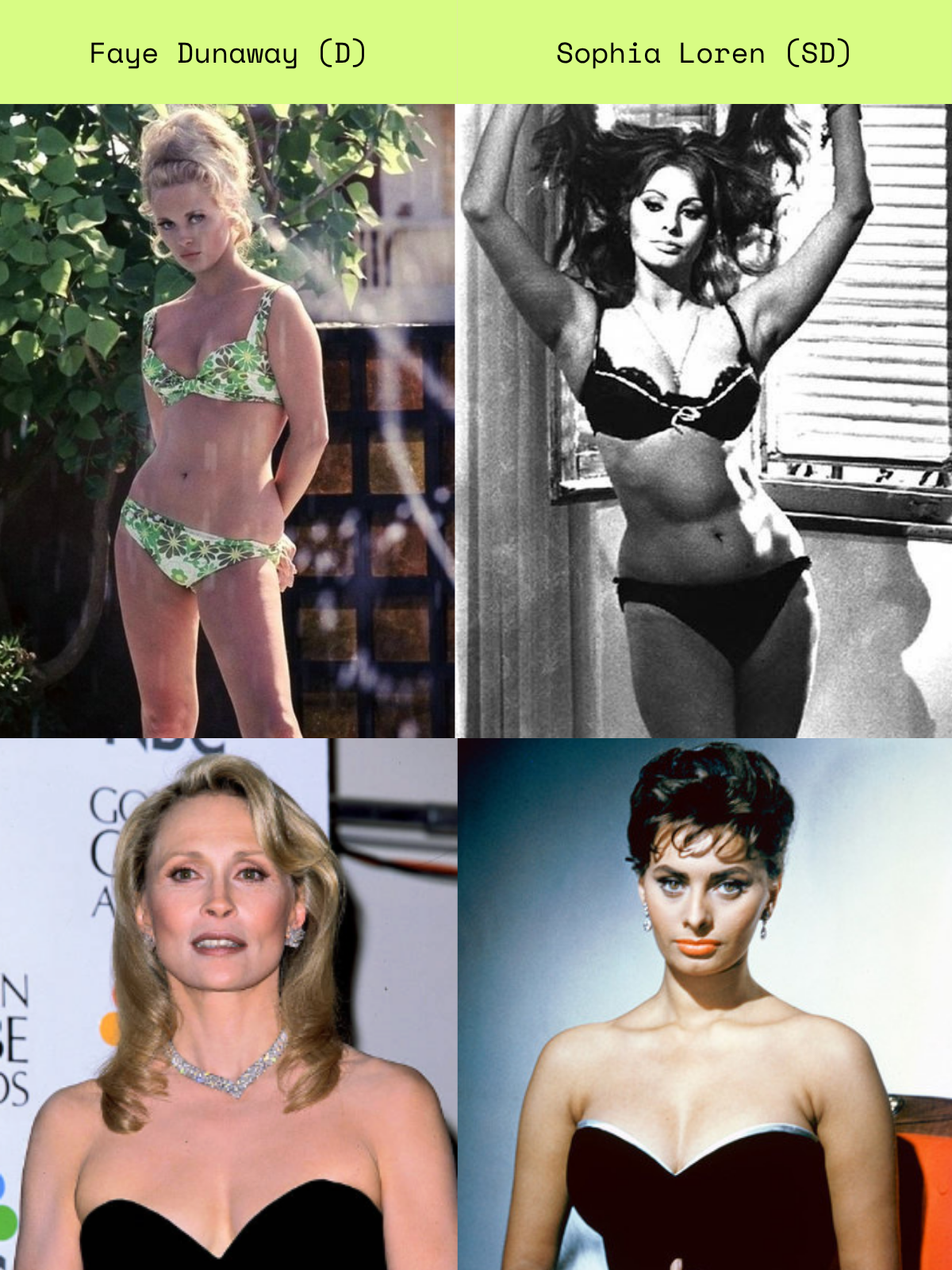
D / SD
Vertical holds in both. D keeps it sleek and close, SD opens through the bust and hips. Try draped versus structured and see which reads better.
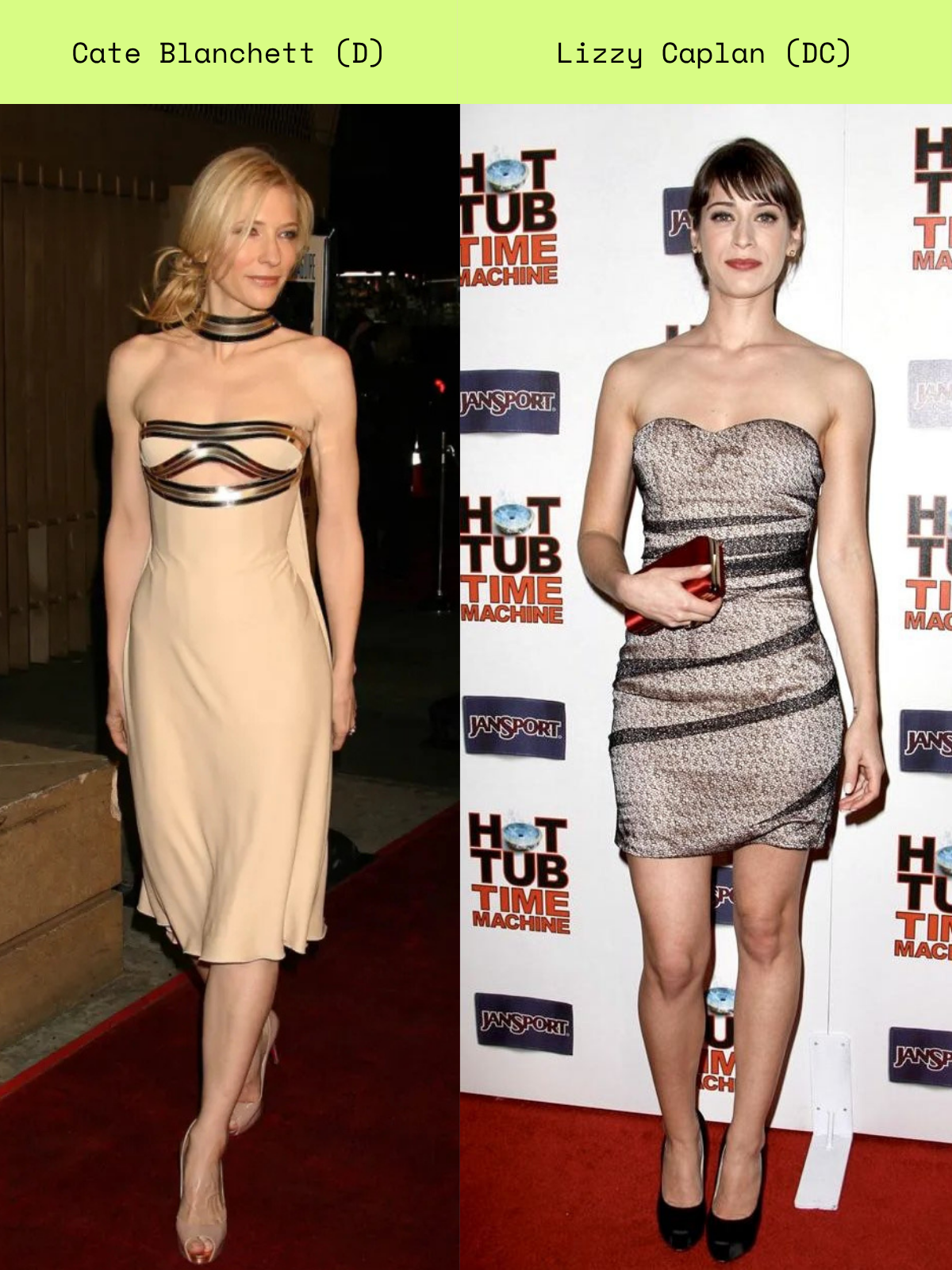
D / DC
Both elongated, both structured, both vertical. The question is whether your frame wants balance or narrowness. Try a structured piece where shoulder and hip are the focal point versus one where everything pulls inward toward a clean column. One will feel like proportion. One will feel like length.
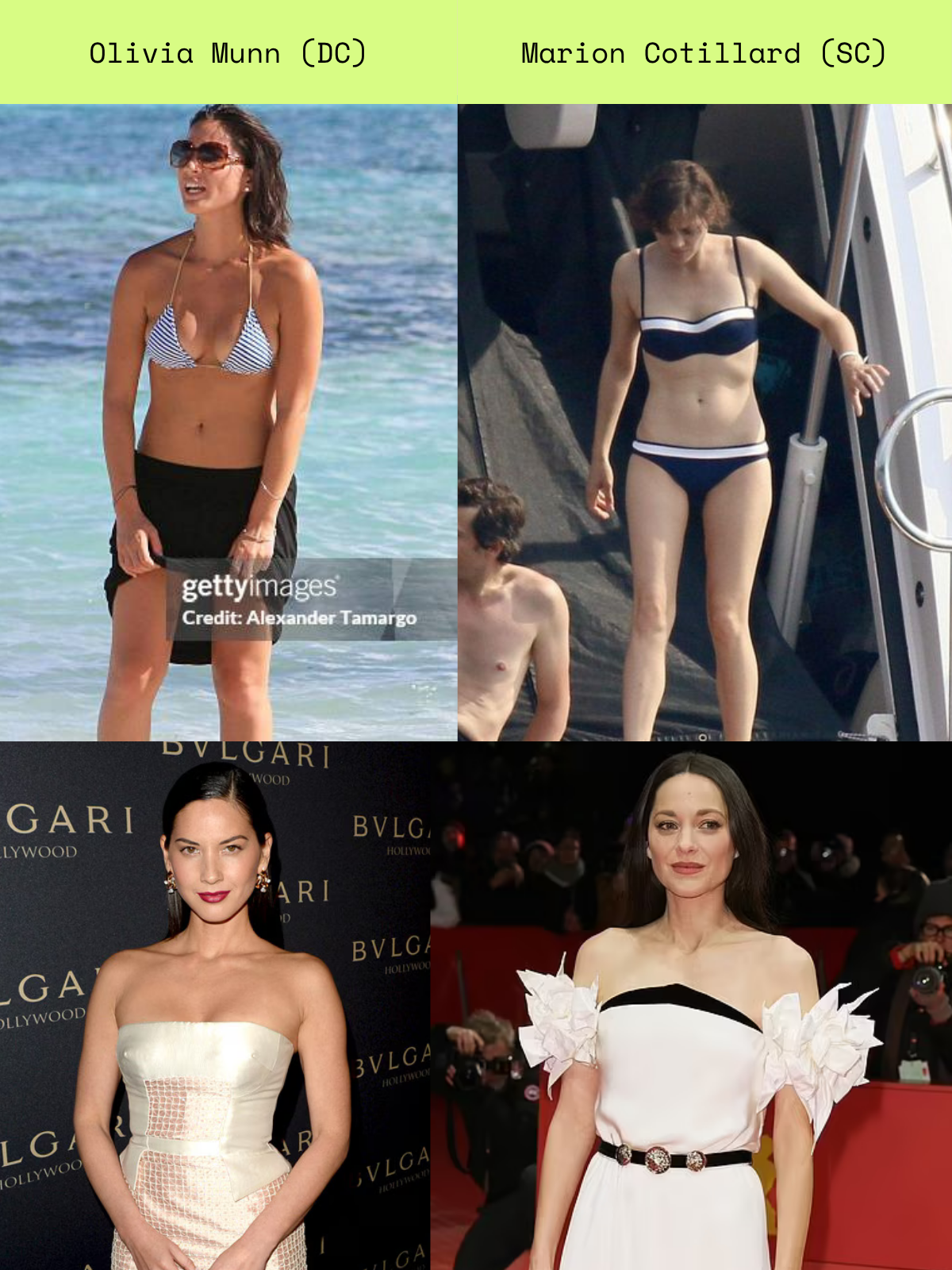
DC / SC
Both are about balance. Equal shoulders, equal hips, a waist that tidies rather than defines. DC wants precision, SC wants softness. Try the same silhouette in a crisp fabric versus a delicate one.
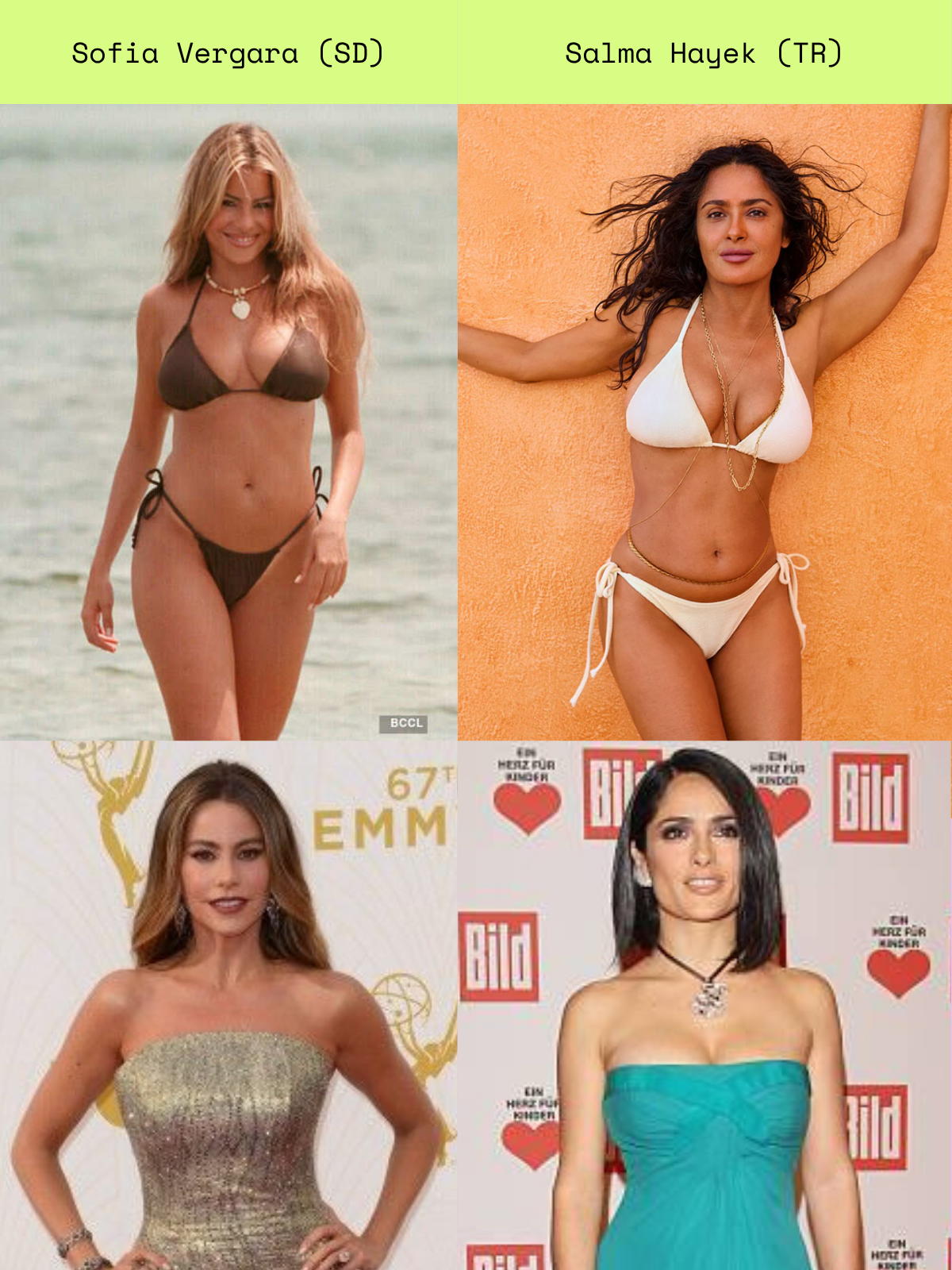
Short SD / TR
Both have curve, both narrow somewhere. Height is often the main separator. SD brings scale that can overwhelm a petite frame. TR is more compact. Try a long dramatic silhouette versus something more delicate and close in scale. See which one carries you rather than swallows you.
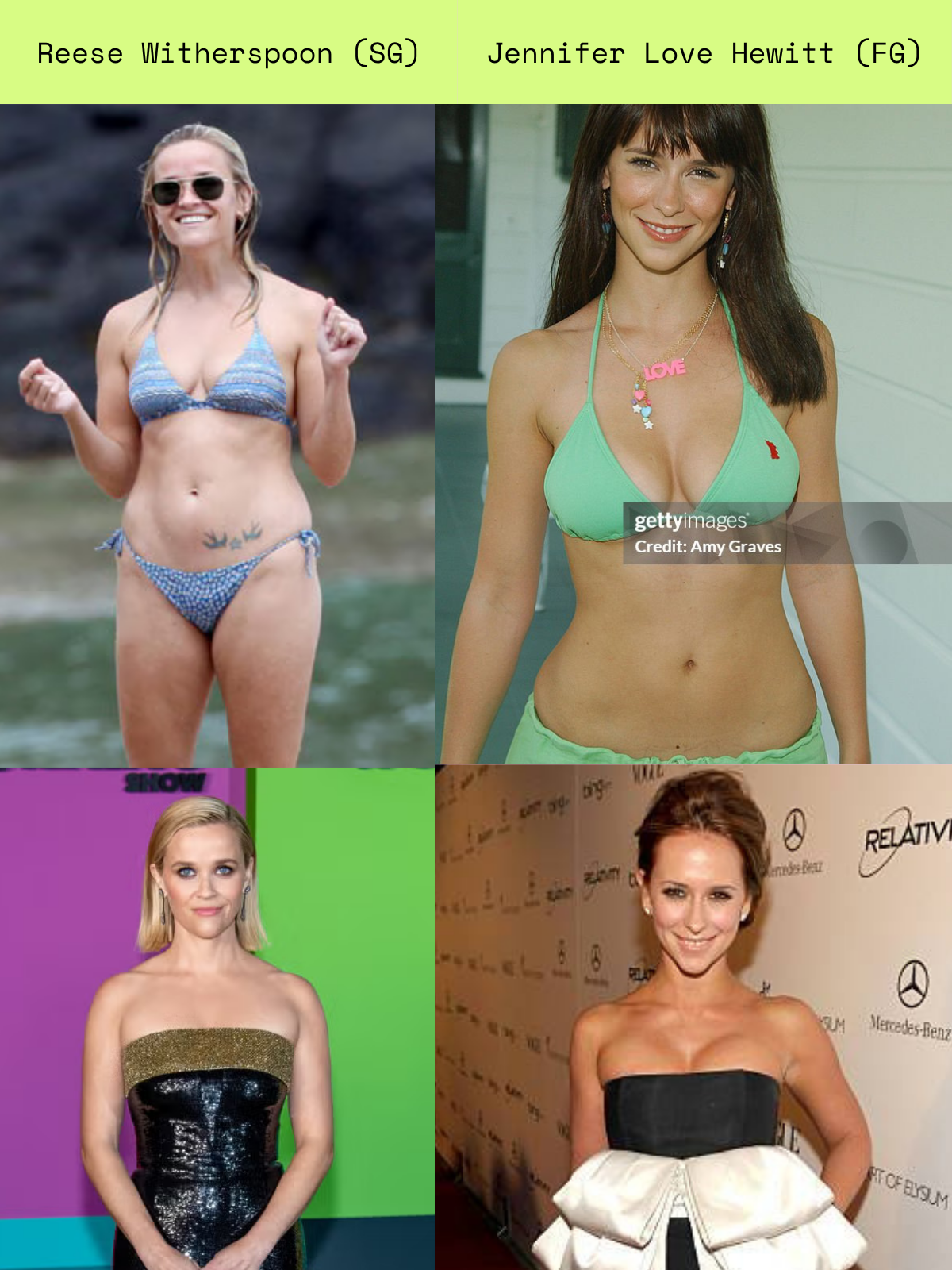
FG / SG
Both petite, both need line breaks. FG breaks with yang: sharp, geometric, structured. SG breaks with yin: soft trims, curved hems, delicate details.
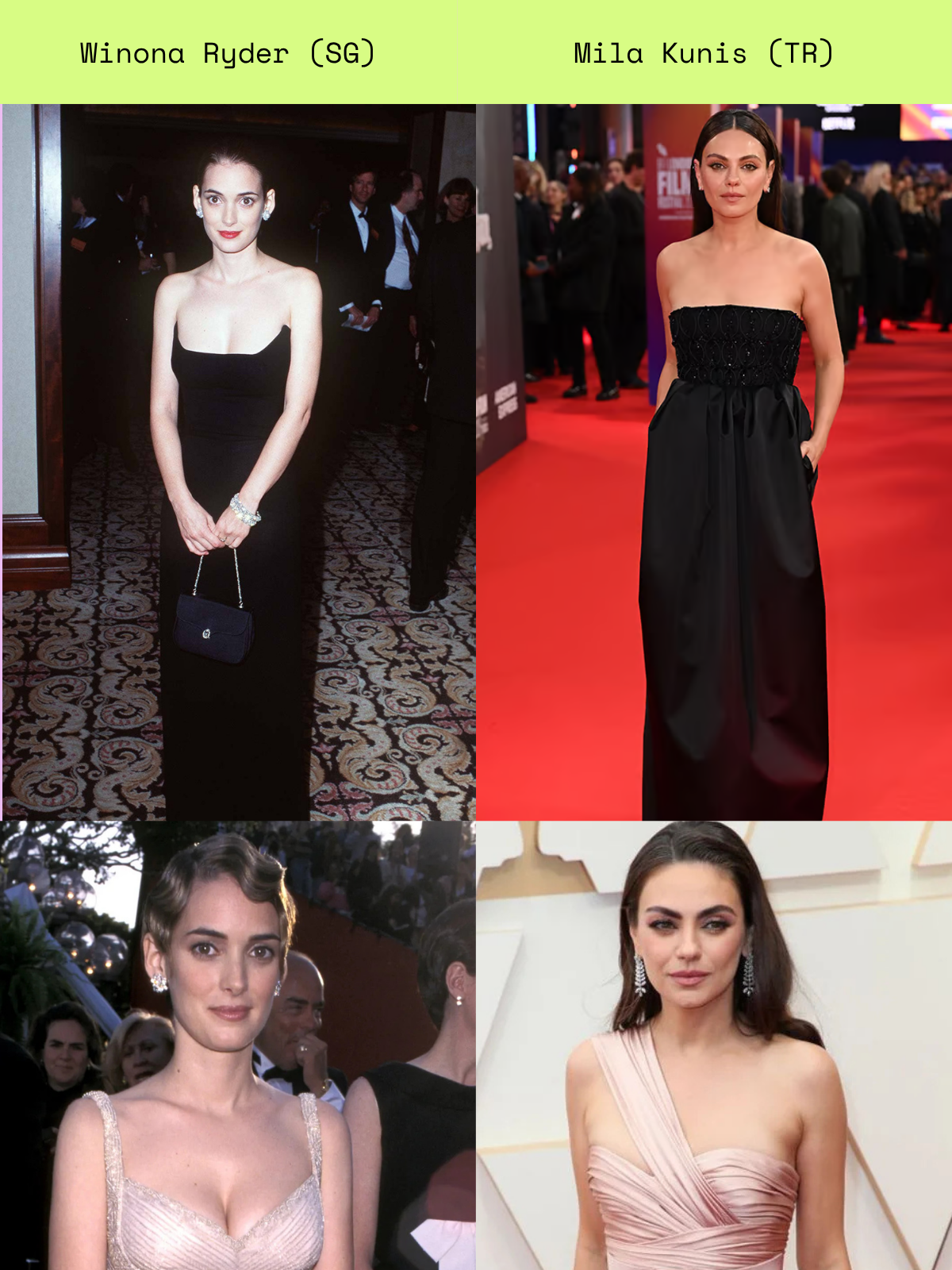
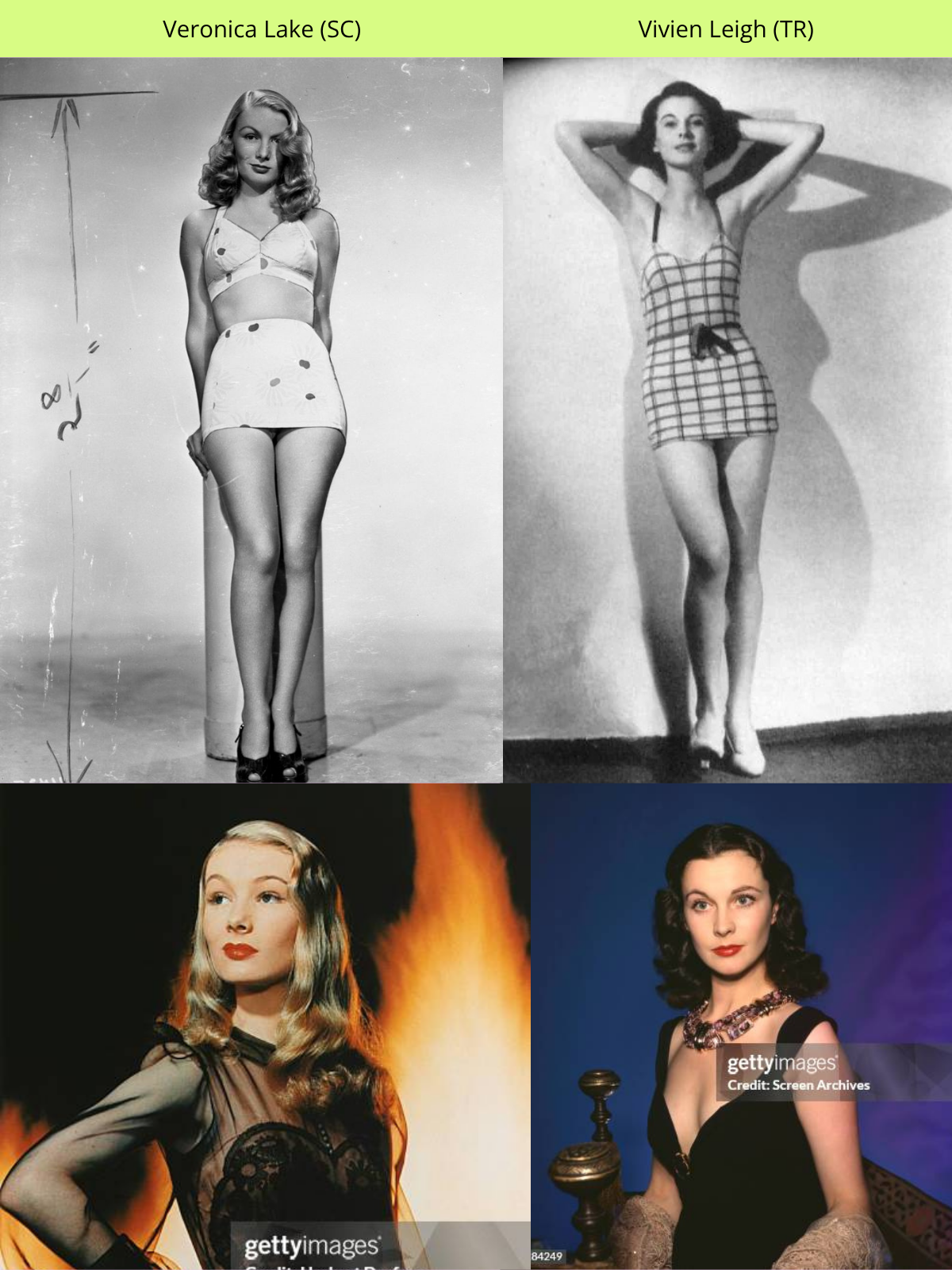
SG / TR
Both narrow, both broken lines. The waist is the clearest test. TR wants it cinched and high, SG wants it present but easy.
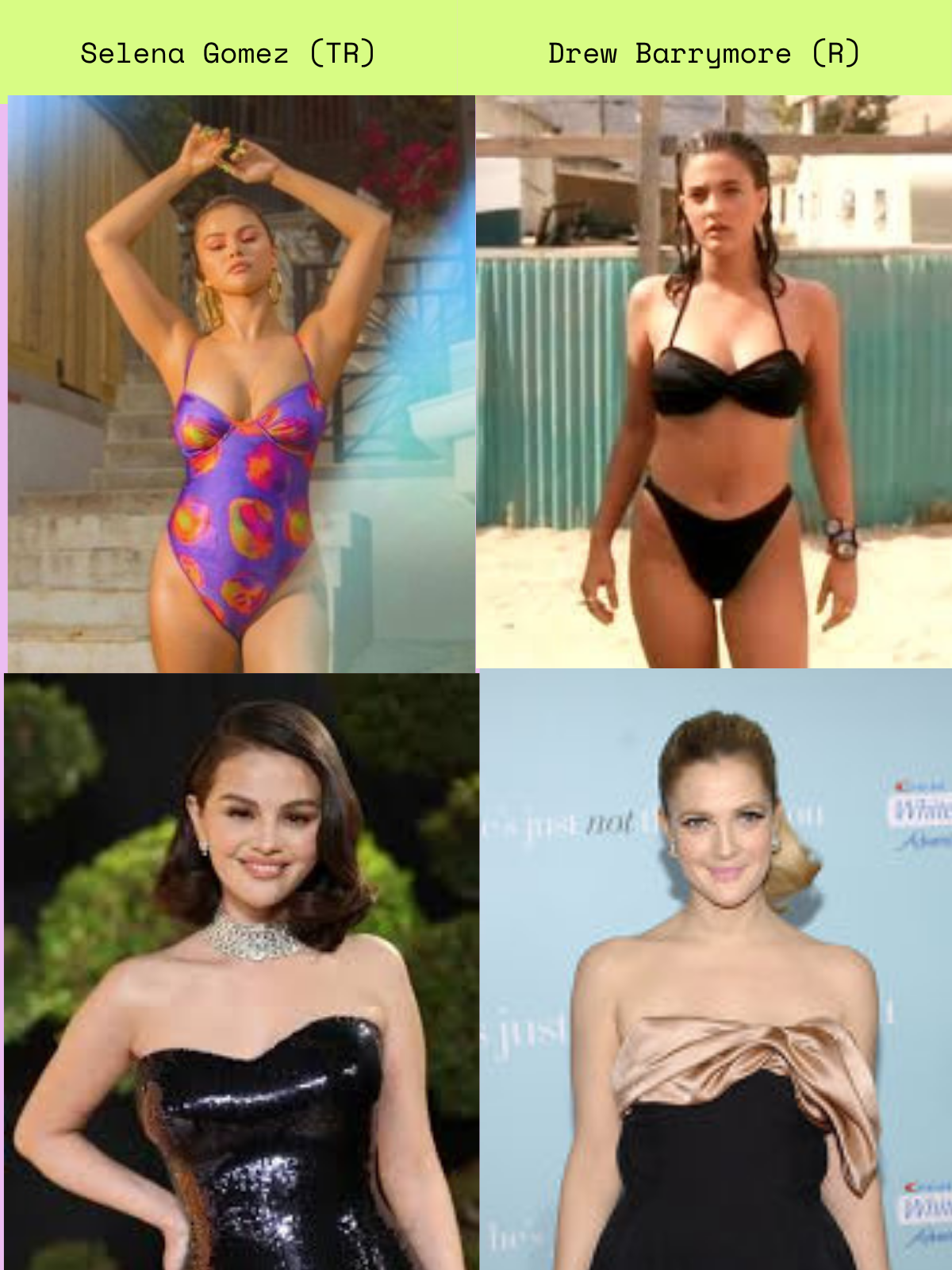
TR / R
Curve in both, but where it lives differs. R carries softness all the way through including the shoulder, nothing closes or sharpens. TR narrows at the shoulder first, then opens into the curve below. The shoulder is your test. Try something that softens all the way up versus something that gathers or narrows at the top.
SN / R
Both accommodate fullness but differently. SN does it with ease and space, the fabric relaxes around the shape. R does it by following the shape closely in soft fabric. Try a relaxed open piece versus something soft that actually skims the body.
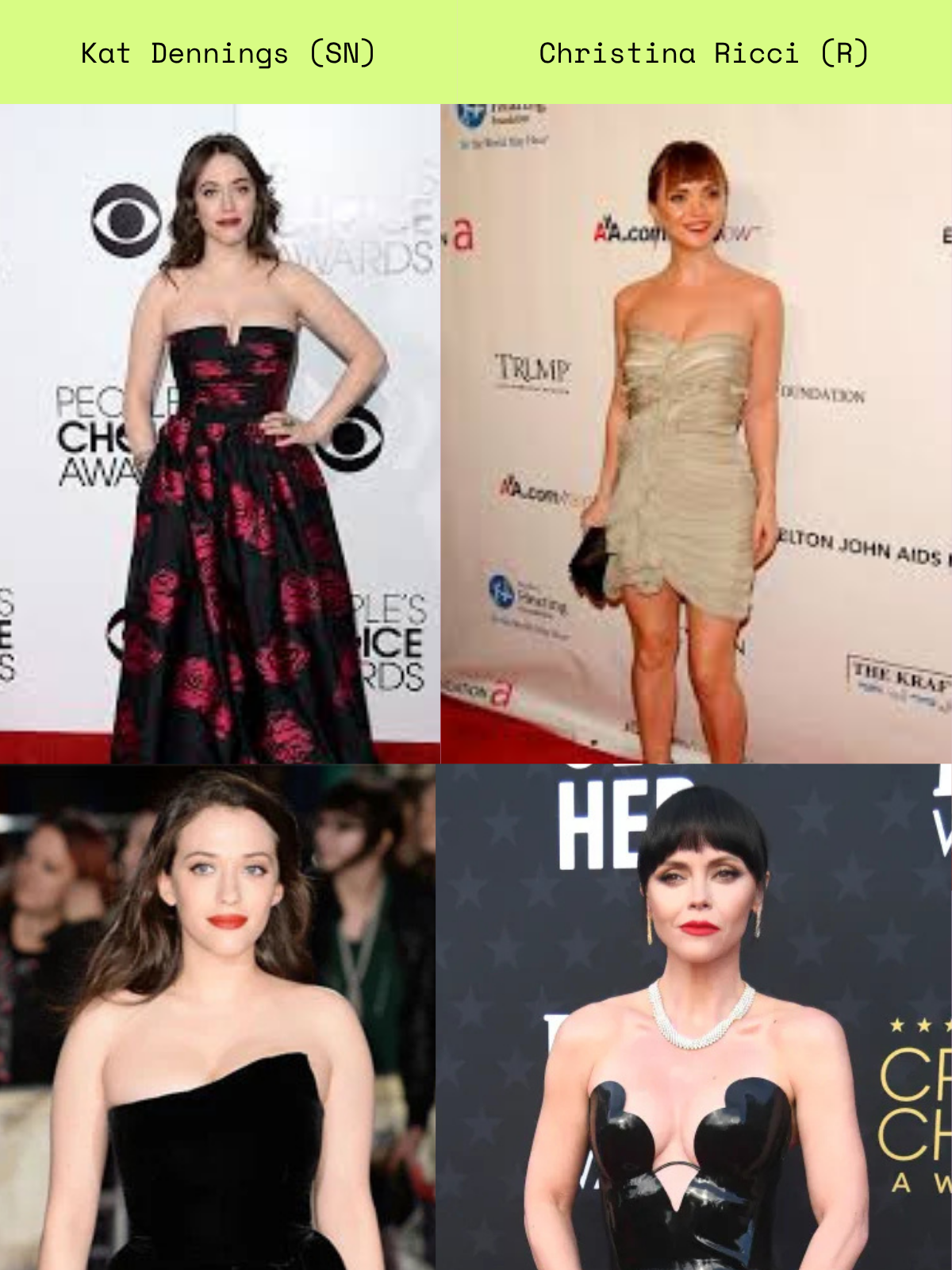
SN / SC
Both soft, both curved, both mid-spectrum. SN suggests the body, SC follows it quietly. Try a relaxed piece with no defined waist versus one where the proportions are quietly even shoulder to hip. One will feel like ease. One will feel like order.
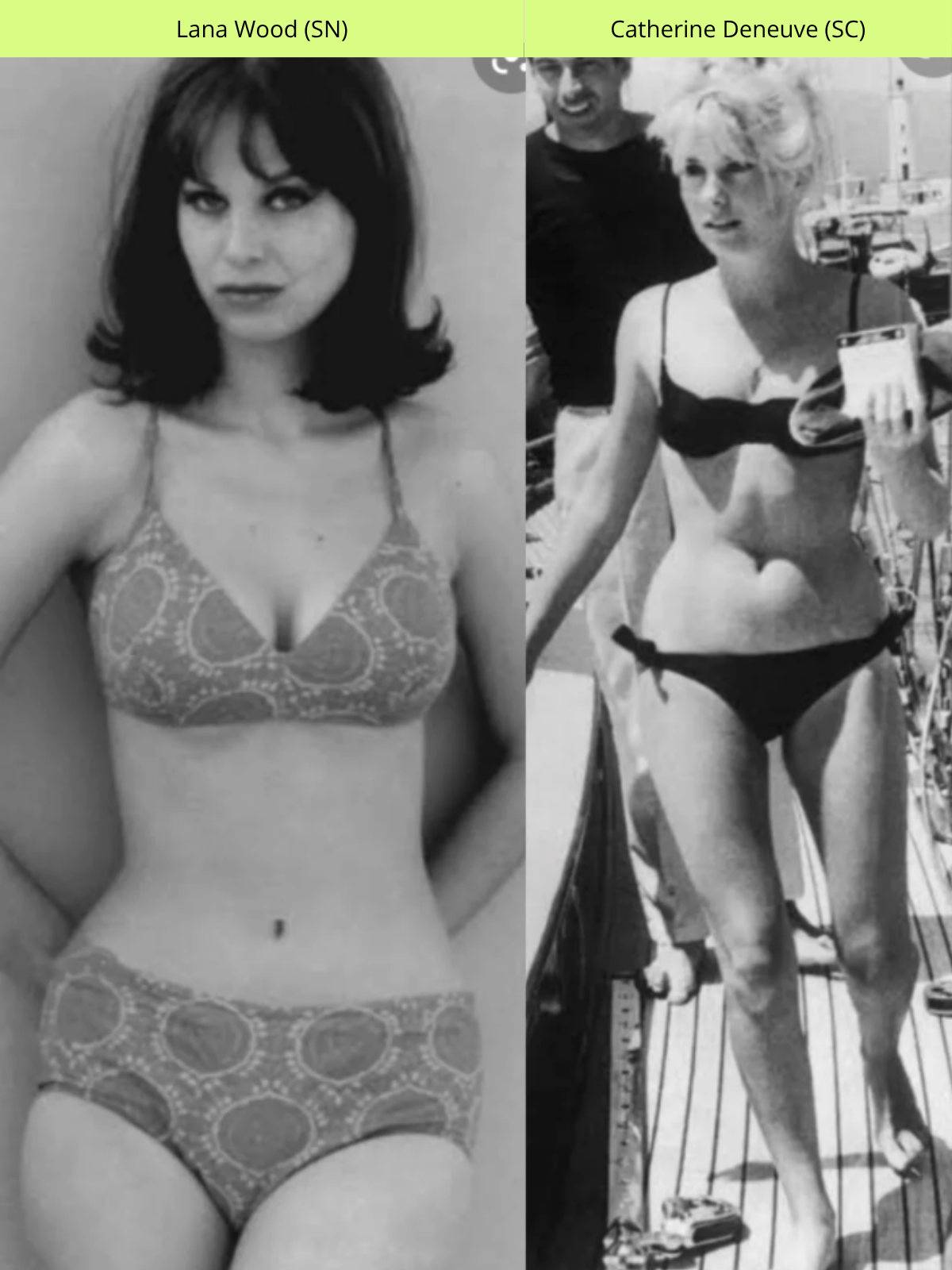
SC / TR
Both have curve, both want soft fabric. The difference is what the curve is doing. SC balances it evenly across the whole body, nothing pulls attention, everything sits in quiet proportion. TR focuses it, narrowing at the shoulder and defining at the waist to bring the curve into sharper relief. Try a soft, evenly proportioned piece versus something that cinches.
So what do you do when you're between two?
You play. You put on things that honour one type to take note of how it feels and how it lands. Then you do the same for the other. Notice what gets complimented, what you reach for on instinct, what your partner notices, what strangers hold the door for.
What you value is data. What you feel better in is data. What the public notices, what gets remembered, what makes someone do a second look, all data.
How I think about it personally
I'm a tall SD who aligns more naturally with a TR essence. That's not a contradiction. It's just an honest description of what reads well on me and what I reach for. These types are also similar. The vertical I have, the drama my frame can carry, that's SD. But the scale I prefer, the delicacy I want in details, the way I like my curve to feel intimate rather than sweeping, that pulls TR. So I dress there. I bring TR essence into SD lines and it works because style was always open. It was always yours. Your Personal Line is your starting point, not your ceiling, and not the end game.
My advice
When you're between two types: wear both. Explore them deliberately. Keep a mental note of the moments that feel right and the moments they don't. Over time you'll start leaning into one, or you'll land somewhere in between that becomes your own personal definition, which is equally as valid.
And remember what you were actually after: it's not the label. It's feeling good, looking good, building to your own attractiveness. If you're between two types, you're already most of the way there.
Related Articles
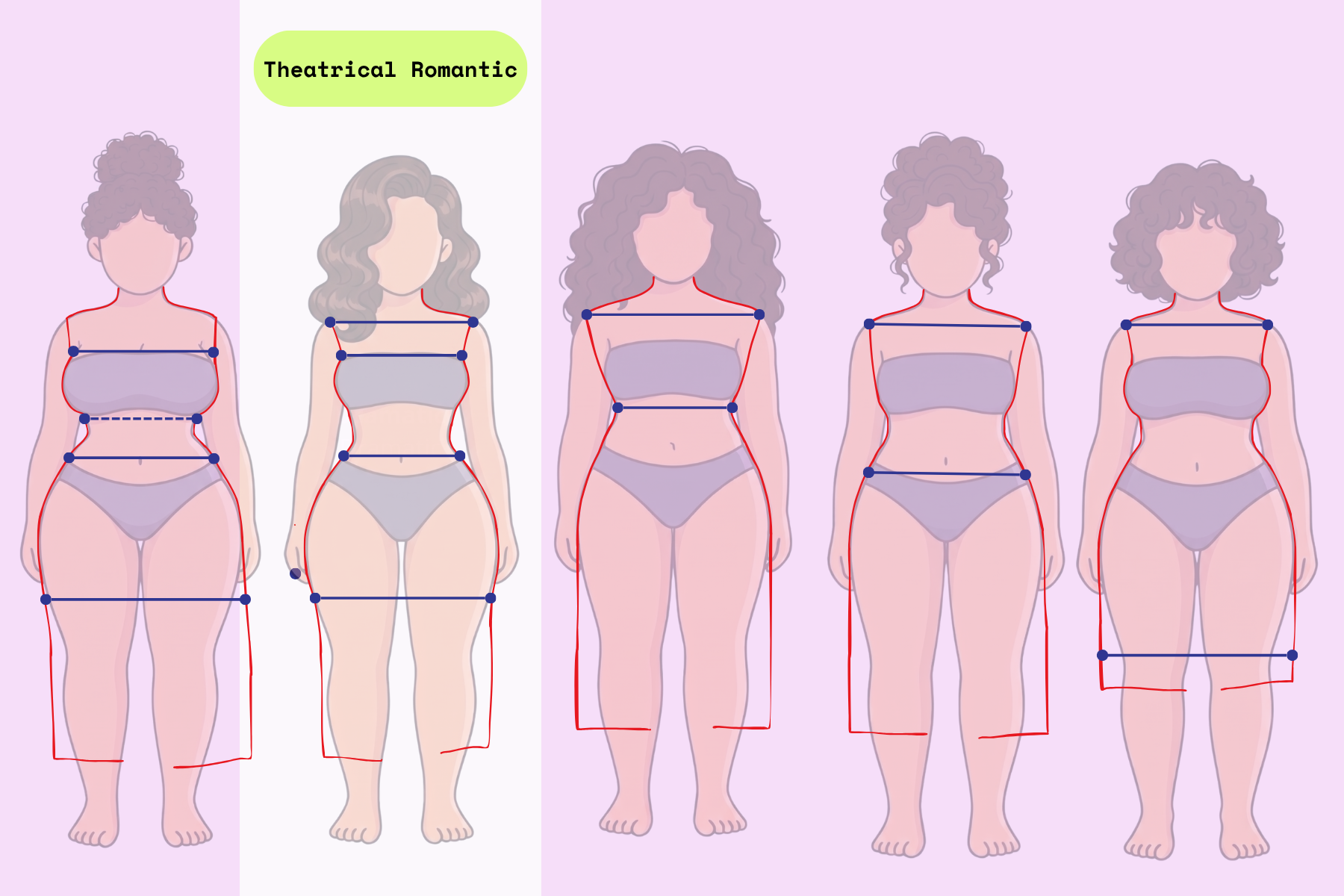
How to Do the Kibbe Personal Line Sketch for Theatrical Romantics
Information for this guide comes from David Kibbe's book The Power of Style. The book introduces the updated process for finding your Image Identity, which now includes the Personal Line.The Image...
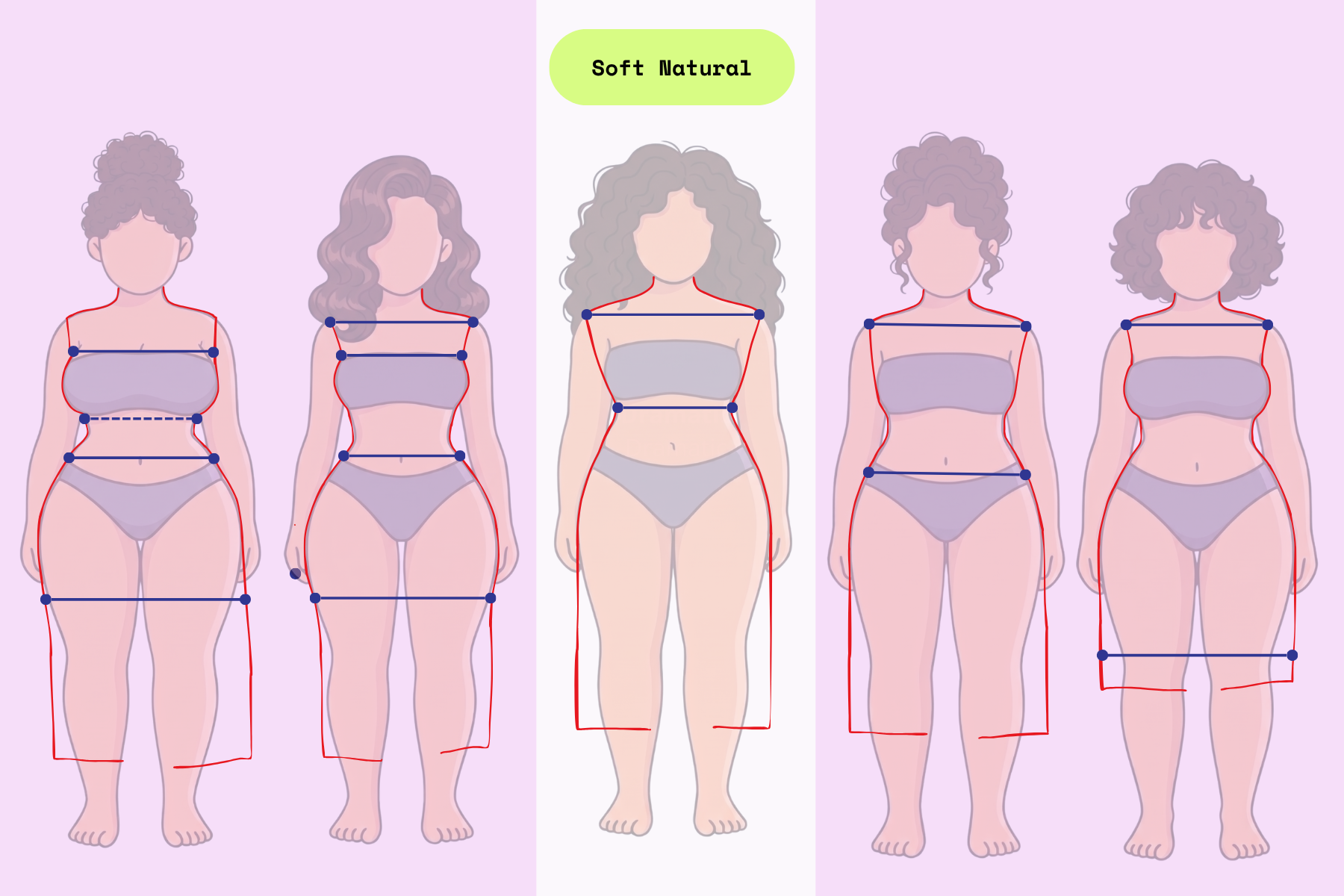
How to Do the Kibbe Personal Line Sketch for Soft Naturals
This guide is based on David Kibbe's book The Power of Style, which covers the updated technique for finding your Image Identity with the Personal Line as its practical foundation.The Image Identity...
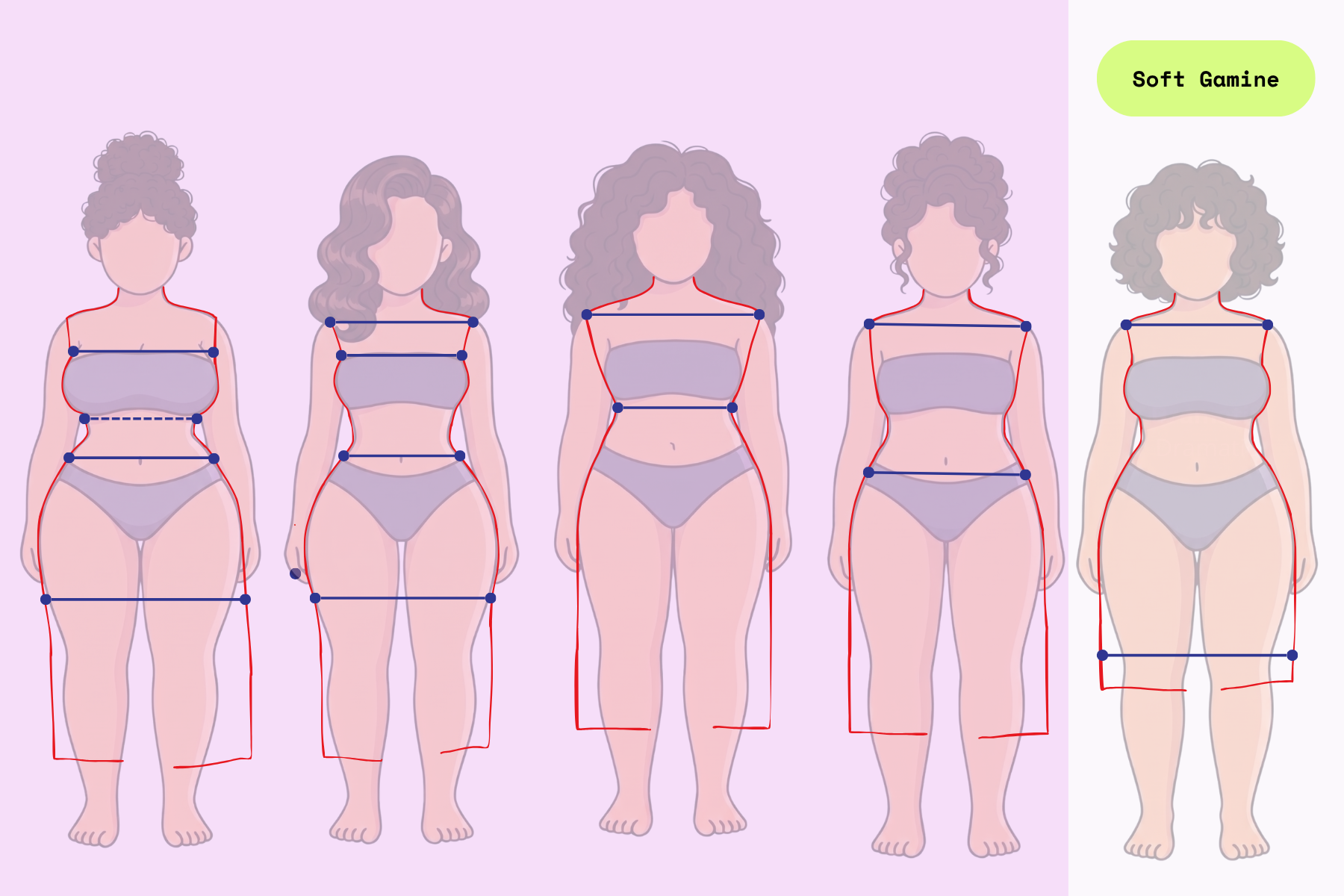
How to Do the Kibbe Personal Line Sketch for Soft Gamines
This guide is built on David Kibbe's book The Power of Style, which walks through the updated approach for finding your Image Identity using the Personal Line.The Image Identity FormulaImage Identity...